Showing posts with label preserving. Show all posts

Sunday, February 1, 2015

Kumquat & Blood Orange Marmalade.

I've had marmalade on the brain.  It kind of started with the several jars of it still left on the shelves from last year around this time.  It was a good and bitter marmalade, but very soft set - runny even - and I was not grabbing it for my toast as I thought I would.  The thing about old jars on the shelf is that they translate as food clutter to me, and I feel true guilt about it.  Fortunately, a conversation with Deena some time ago led me to remember that her friend used up old marmalade in granola so that's what I did.  I strained out the citrusy bits and subbed it for the honey or maple syrup.  It's good granola: a not stop-dead-in-your-tracks good, but more of a serviceable good.  And it's nice and crunchy too.  It will not be a bother to eat.
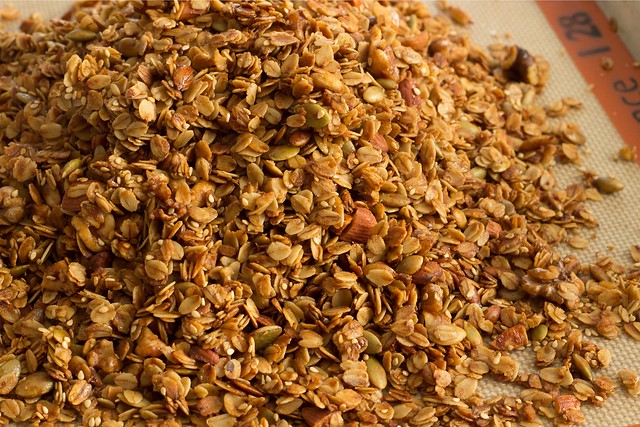
marmalade granola

It seems with less time to do actual experiments in the kitchen, I have more time to daydream about what I would do if I did have the time.  I think about what ingredients I'd like to work with and which flavors I'd combine, and then when the time presents itself I'm more than ready to make the most of it.  I'd been thinking about combining kumquats and blood oranges for weeks now, since I first saw the two of them popping up on my grocery trips.  I wanted to add chiles too because we all know that I'm a complete sucker for sweet and spicy things.  Late last week I finally got my kumquats and blood oranges, and on Friday night after the boys were all in bed I got to begin my 2015 marmalade.
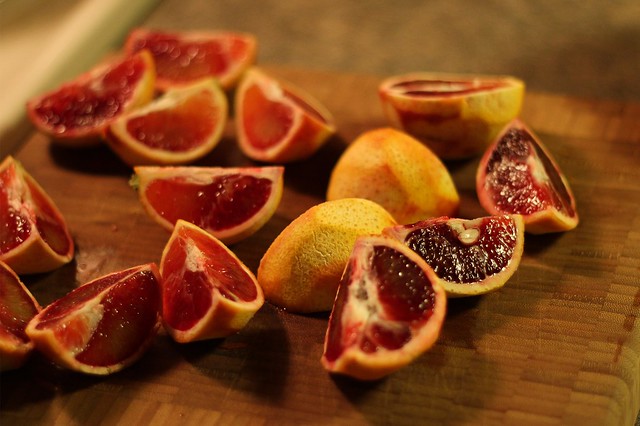
blood oranges.

This marmalade may exist in some form somewhere else, but if it does, I don't know about it because I did absolutely no research on it.  I combined techniques I've read about and done in the past with the wisdom of Linda Ziedrich's ratios, and am beyond pleased with the result.  This marmalade is a good balance of sweet and tart and doesn't really read as bitter the way some marmalades do.  As a bonus, it's also a gorgeous color.
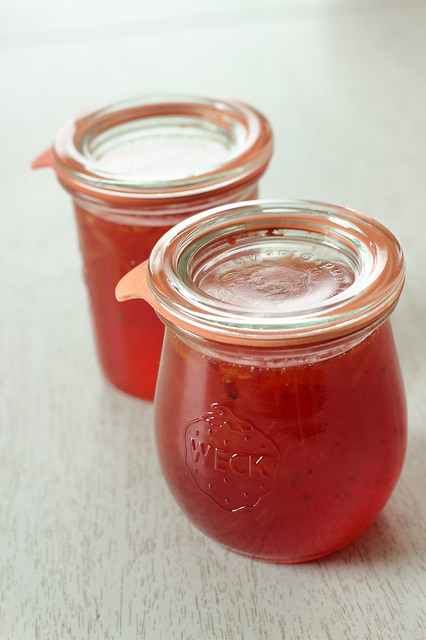
kumquat blood orange marmalade

I started tasting a variety of dried chiles after I tasted the sugared blood orange juice/kumquat and orange peel mixture.  My original thought was to use guajillos (my favorite) or mulato chiles but I didn't want to overpower the pretty unique citrus flavor going on.  Then I turned to my new favorite chile flake the Urfa Biber and decided it was just a little too strong.  I settled on New Aleppo, which has a spicy, almost strawberry flavor to it.  I'm calling it New Aleppo after reading this article on how the Aleppo now available from northern Syria is unfortunately impossible to get.  It's a horribly sad thing, for more reasons that just the loss of a spice. 

kumquats & blood oranges

kumquat blood orange marmalade 
(2)

Begin the day before you'd like to can and use organic citrus if possible.

Kumquat & Blood Orange Marmalade
makes about 2 1/2 pints
  • 1 lb. blood oranges
  • 10-12 oz. kumquats
  • 5 cups filtered water, divided
  • 4 cups granulated sugar
  • 1 t. Aleppo pepper (optional but encouraged)
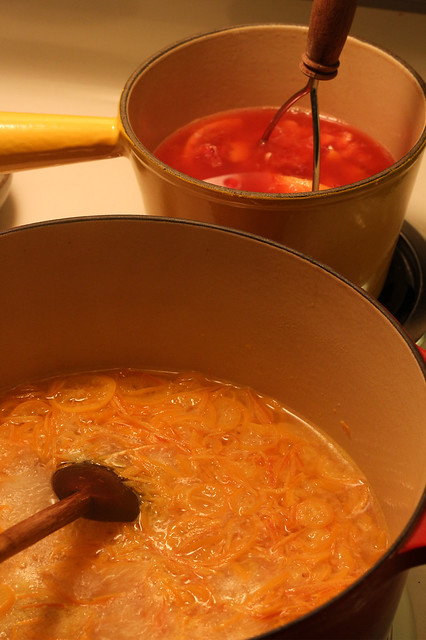
Wash all the citrus well.  Peel the blood oranges with a potato peeler, leaving behind the white pith. Slice the peel into the thinnest shreds you can and place them in a large preserving pot.  Quarter the remaining oranges, pith and all, and pop them into a smaller pot with  2 cups of water.  Bring them to a boil, lower to a simmer and cover them with a lid.  Cook for 30-45 minutes until they are fully soft and can be easily mashed with a masher.  Let them cool slightly.  Meanwhile:
Slice the kumquats as thin as possible into rounds.  Nick out any seeds and save them on the side.  Add the kumquat slices to the orange shreds in the preserving pot, tie up the seeds in a small piece of cheesecloth, and add 3 cups water.  Bring the pot up to a boil over medium high heat, then reduce heat and simmer for 15 minutes.  Remove from the heat, cover, and let sit overnight at room temperature.

When cool enough to handle, pour the mashed blood orange into a jelly bag (or similar) and allow to drain for awhile.  (If you get impatient as I do, squeeze the bag to glean as much juice as possible in a shorter amount of time.  Generally, this isn't something canners recommend since it can cause cloudy preserves - but I'd always rather have the quantity that the clarity!)  Transfer the juice to a jar and refrigerate until you are ready to continue.

Ready jars, lids, rings, and a boiling water bath.  Add the blood orange juice, sugar, and Aleppo pepper to the preserving pot (you should have 4 - 4 1/2 cups of total liquid), stirring well over low heat to dissolve the sugar.  Then bring the mixture up to a boil over medium high heat.  Stir regularly at first and constantly towards the end.  Heat to 220 degrees or to desired set on a cold spoon or plate.  Take the pot off the heat and let it stand 5 minutes before ladling into jars leaving 1/4 inch headspace.  Process in a boiling water bath for 10 minutes, then remove the canning pot from the heat and let the jars stand in the water for 5 minutes before transferring to a towel-lined countertop.
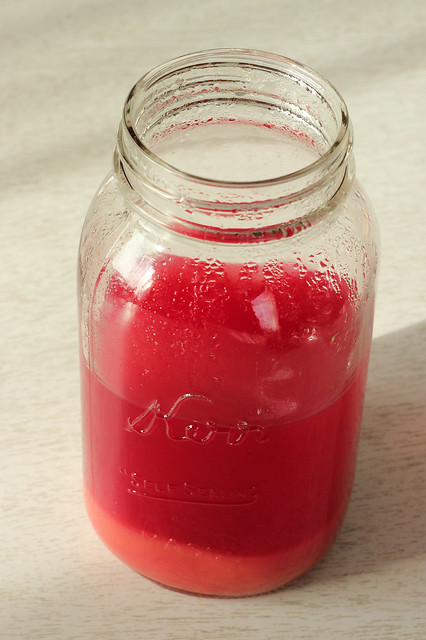
blood orange juice
I was surprised at how colorful it the blood orange juice remained.  At the bottom you can see the sediment that comes from squeezing the jelly bag, I figured it was good pectin and I suspect I was right.

When researching my book, I consulted with the Master Preserver at the extension office in Madison about sterilizing jars.  I never used to sterilize jars in boiling water before canning sweet preserves, and she advised me that this is not the proper thing to do - or at least proper for sweet (non-vinegar) things that are processed 10 minutes or less.  Ever since then, I dutifully put my clean jars in my water bath as the water is coming up to a boil and I let them simmer away until filling them.  I still always wonder just how many people do this, but I always then suppose it's not really adding that much work to a small batch of preserves.

I might have to make time for another small batch of this marmalade since it was so good I ate almost half of a little 4 oz. jar at breakfast time today.  But maybe I'll just appreciate the small batch I have and not over preserve.  I do seem to be eating less and less sweet preserves, and not because I don't whole-heartedly love them.  Maybe something else will spark my interest in the next few weeks of winter and I can daydream my way into another good combination.  I had better save some room on the shelf for that.

Wednesday, November 12, 2014

Quince, year two.

"Just one more week and things should slow down a little bit."  I think that has been my mantra since September 2nd when our school year began.  Instead of slowing down, we're spiraling head first into the holiday season and I know full well that when I have the time to blink twice it will be the new year.

For this monthly edition of trying to keep up with my food blog, I bring you quince.  This is the second year now I've had quince, and I had much more to use than last year.  When I picked them up from Klee's, they were already picked for a week and fully perfumed.  I read about storing them with the linens (along with using the spent fruit to make membrillo) in this very charming article.  Instead of a brilliant green, most of them were already bright yellow.  Being pretty new to this fruit, I wasn't sure how ripe they would get, how long they would hold.  I pledged to do my best to get them preserved as soon as I could, and 10 days later I made good on my promise.

Just the day before I got them, I learned that quince, along with their relatives apples and pears, are  related to roses - which is probably old news to you, but was a revelation to me.  I started to taste quince in a different way, I could feel the velvety rose petals ambling for my olfactories; I felt like I was dealing with flowers instead of fruit.

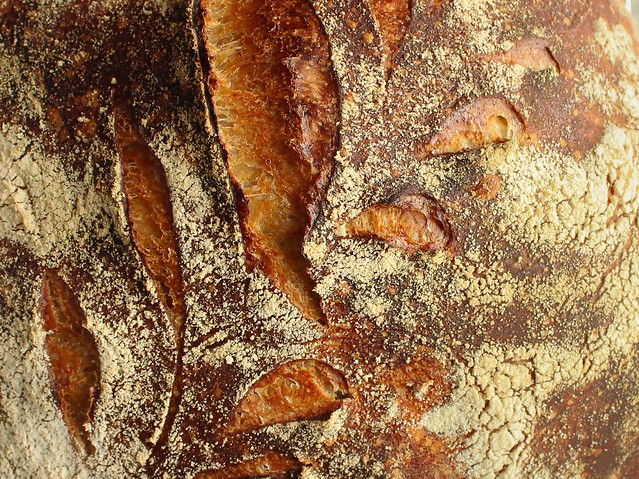
But meanwhile:  my 100th loaf of sourdough this year:

100 :: 11.07.14
I started my 2014 loaves project in January, not really sure how many loaves of sourdough bread I bake in a year.  Turns out it will be more than 100...

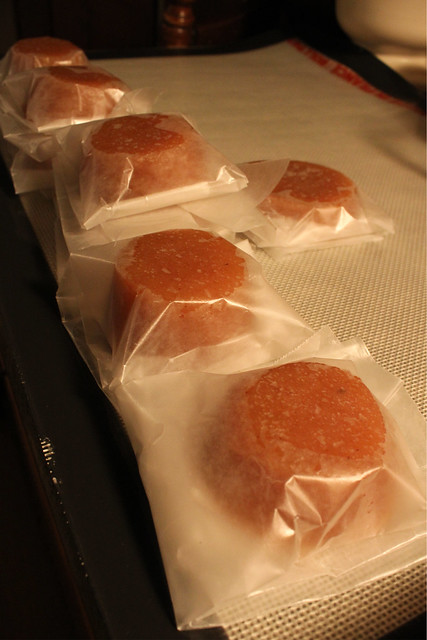
The one thing I wanted to make first with the quince this year was membrillo, the sliceable fruit paste made from naturally pectin-heavy quince pulp.  I made two batches, using different methods and (obviously) differently aged fruit.  The membrillo I made first with the just ripe fruit was redder and set more readily than the one I made more than a week later, but my variables were many so it's hard to say what factors played a part in it.  I set both experiments to gel in lightly oiled ramikens and pudding cups, and let them sit in the open air after unmolding them.  (The second batch had to spend a few hours in the dehydrator to become sufficiently cured.)

membrillo

I'm very happy with my membrillo.  I wrapped each piece in waxed paper and layered them in a zip top bag.  I proactively bought myself a piece of manchego cheese to enjoy some with, but haven't made the time for making some fancy crackers - so my gourmet snack or appetizer is waiting for me to catch up I guess.

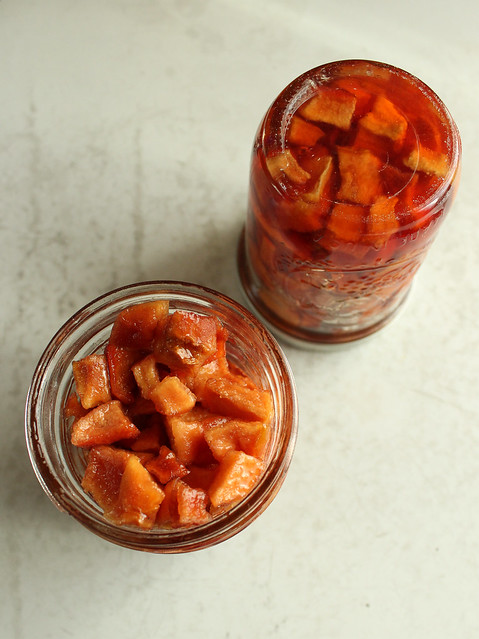
The second quince experiment came to me by way of Saltie - that cookbook crush that I've had since last spring that is still going strong.  Saltie candies quince to use in a quince lassi (yogurt, honey, candied quince??  I'm definitely in.), and it turns out that candying quince is about as effortless as it gets.  Except that I popped it into the low temperature oven too late in the day and had to set a night alarm to keep checking on it.  Now that the actual baby is sleeping pretty consistently through the night, I create the kitchen project that needs sporadic monitoring.  I don't really value sleeping through the night when I have the excitement of things like this.

candied quince.

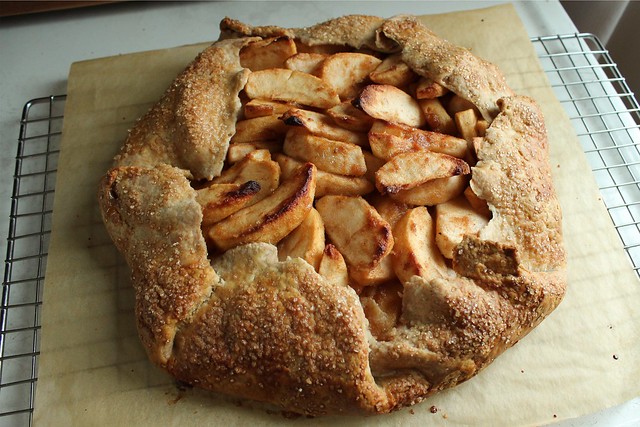
The candied quince is a tad gritty - but in the way that a pear is a little bit gritty.  It's a pleasant gritty, and it's hard to stop nibbling after a single little cube.  The syrup is very thick (you can see it in the jar that I turned upside down), and it does have some movement.  I have the two jars stored in the fridge and as I think of them I keep turning them head over heels every few days.  I have not tried the lassi yet, but I will.  I've been trying hard to rein in my sweet teeth.  I've made more than one apple galette in the past two weeks.  I like to think I've gotten rather good at the galette; I barely use any sugar (and I never measure the dark brown that I use in it, only that I grab what I can with my thumb and 3 fingers and sprinkle it over the apples), then I add a few spoonfuls of applesauce and some cinnamon and nutmeg.  The applesauce in this one was spiked with quince.

apple(quince) galette.

When I got my haul of quince, I also got some more apples that I had destined for apple pie filling.  Omer's wife, Candy, freezes the peeled sliced apples with spices in portions enough for pies and that sounded pretty good to me.  But man if those apples didn't stand around the kitchen for a whole week, every day ticking by with me feeling more and more guilty that I hadn't tackled the lot of them and gotten them tucked into the deep freeze.  I finally conceded and just turned them into more sauce: but it was the best sauce ever because most of those apples were Belle de Boskoop variety, and I decided that I would call it my "reserve sauce" and add some spent quince pulp.  I have yet to can it - I have 4 quarts worth of sauce waiting for me... I think I'll schedule it for tomorrow evening if I can swing it.

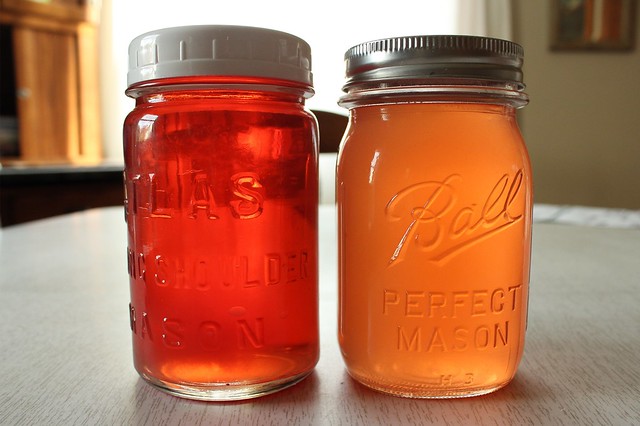
The pulp for my reserve apple(quince)sauce came from making quince syrup.  Again, I made two batches, the first redder and maybe a touch more floral and the batch a week later less so, but still every bit as delicious.  I didn't mean to repeat myself, but I enjoyed the flavor of the syrup so much that I kind of had no choice.

quince syrup.

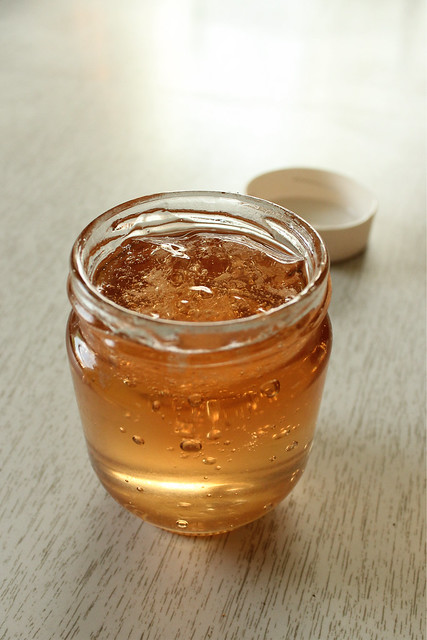
The last thing I made was quince jelly.  I used the fruits that had been at home with me for about a week, and the flavor of the jelly is probably a little milder than if I had used them at what I think might have been their peak of ripeness.  But the color and set of the jelly is so good that I don't care.

quince jelly.

It's like the palest champagne color, and so pretty that I forgave it for being a little too vigorous and boiling over (ALL over) my freshly detailed stove top.  (Note to self: stop being so cheap and invest in a 7 quart preserving pot.)  I quickly ladled out several scoops to a bowl (and even still had some boiling over...) and was so surprised when it set.  This little jar was the result of a very big mess, but I take some comfort in the 7 other perfect jars nestled on the canning shelf.  I'm going to have a lot of sweet stuff to work my way through this season!  Fortunately it will remind me of these busy fall days, the generosity of the orchard, the pleasure of learning new things, and enjoying the mess along with the organized.

Monday morning was chilly and I started my oven at a low temperature and roasted the last 6 quinces to make a jar of jam like I did last year.  I kept poking at them with a knife every so often, getting up from my coffee at the table where one son was doing school work, and the other was busy underneath with his own contrived works.  I wondered where I got so lucky to cultivate a home life like this, I wondered why it passes so quickly even when I try so hard to slow our lives down.  But winter will hopefully help me out with this, help us nestle in beneath the snow and not really need to go anywhere.  If winter is gracious, it will help us all in our patience and remind us of what now lines the basement shelves.

Thursday, August 14, 2014

Peach Sriracha Butter.

One of the surprising blessings that came along with having children was getting to know my neighbors.  I live in a small neighborhood of about 3 streets wide, a collection of maybe 100 homes that before kids I knew nothing about.  Introverted by nature, I politely went about my day coming to and fro without much interaction with the community around me, exchanging a few pleasantries maybe but not really knowing anyone personally.  Kids changed that.  Suddenly, you begin to run into the same people while running after a toddling youngster: you discover that your kids play well with their kids, you are on a first name basis with every dog on the block, and you find that the people around you are really interesting and creative and lend a huge impact to your daily life.

Monday I spent part of the morning with a few lovely women as our children played hard together.  There seems to be an unstated rule that conversation can be quickly interrupted for any number of reasons, which is actually quite nice.  It frees you from the rigor of conducting yourself in a more proper manner; I've never felt like I've been very good at moderating the flow of conversation, so stopping one abruptly to run after a child and then starting up a new one suits me pretty well.

My friend Susan is a musician and we got to talking.  She was saying how she had material that had been on hold since before her son was born (5 years) and how she should never do that because it interrupts the process.  I immediately thought about my own creative processes.  If I don't take the time to document something that really inspires or excites me within a day or so of making it, I just let it go.  "Of the moment" is so much part of the thing that makes my writing mine, makes it relevant to me as I look back on it.

It's really not so unlike preservation as I capture that split second that the food goes in the jar, I also sieze the feeling around it - the light in the kitchen creating pictures that echo the weather outside and even the time of day I had the time to muster the thoughts to the page.  Making that time seems ever more difficult as the summer is in full swing and there are so many things that just pop up on a day to day basis.  Prioritizing my online life falls to the back of the line, even when there have been so many things worthy of sharing.

peach sriracha jam.
Food in Jars' Peach Sriracha Jam (Honey Sweetened Peach Chutney) I made last week.

The summer is the heaviest preserving season, and traditionally I think I've been much more creative than I've been this year.  Short both on time and money, I didn't overdo or overthink my pantry shelves.  I have smaller batches and just enough based on what was eaten most heavily last year.  Where I used to make the time to stand stirring the pot with excess, I now stirred it with just enough - thankful for it and happy I knew where to turn for solid recipes when I didn't have the wiggle room for experimentation.

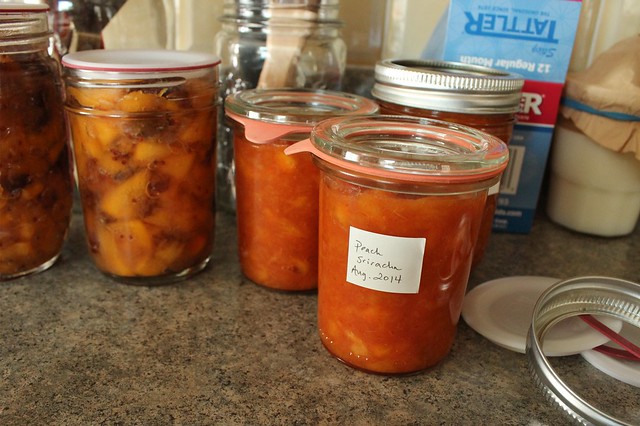
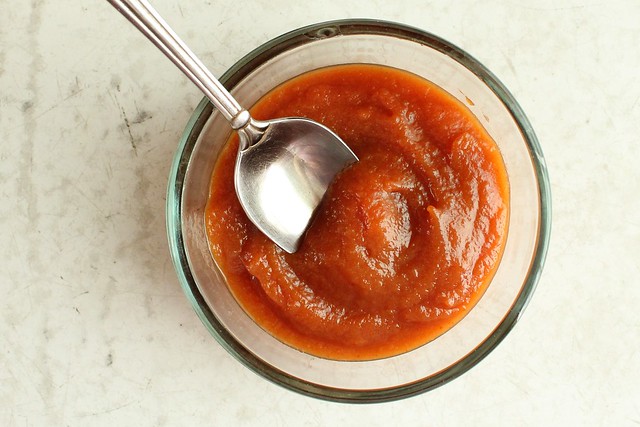
I got peaches at two different times, and split both with  neighbors.  (You can read about the first peach adventure here.)  Quickly enamored of the honey-sweetened peach chutney that Marisa McClellan posted on her site Food in Jars, I turned to her latest book as the peaches softened and I felt guilty just eating them all standing alone over the sink.  I made the small batch last week and was totally addicted.  I had exactly 2 lbs. of precious peaches left, and got to thinking that making the recipe into a more homogenized butter might be a pretty swell idea.  It takes a little longer for the boiling butter to thicken and it spatters up the stove something terrible, but all in all I think it's worth it.  It's like a spicy peach ketchup, and I've been trying it on everything.  And, just as you'd suspect, it is good on everything.

peach sriracha butter.

Peach Sriracha Butter (adapted from Marisa McClellan's recipe in Preserving by the Pint)
yields about 2 half pints
  • 2 lbs. peaches, pitted and pureed (I used a Vitamix, but you could use a regular blender)
  • 1 c. granulated sugar
  • juice of 1 lime
  • 1/4 c. Sriracha sauce
Combine the peach puree, sugar, and lime juice in a preserving pot (I used a 3 quart shallow saute pan, despite the spattering issue).  Over medium high heat, cook and stir frequently until the butter reduced and thickens, 20-30 minutes.  You should be able to draw the spoon through the butter and the trail doesn't fill in quickly.  Just before hitting the right consistency (aim for a thick ketchup), stir in the Sriracha and bring back to a simmer until thickened.

Pour into sterilized jars leaving 1/2 inch headspace, and process in a boiling water bath for 15 minutes.

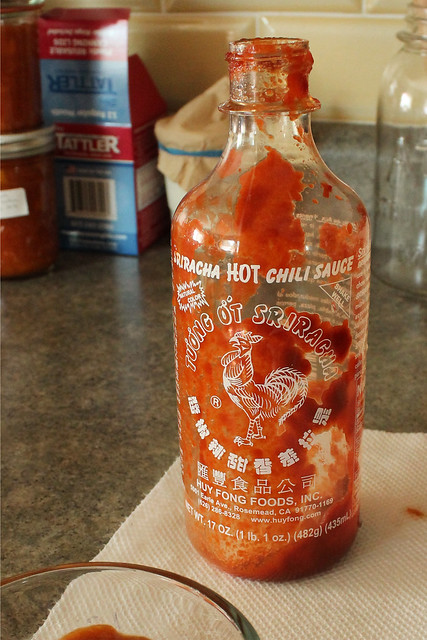
sriracha
Does anyone ever remember tossing out a bottle of Sriracha?  It seems to just last forever, and then disappear...

Peaches have now come and gone.  I really shouldn't dare make any more sweet preserves for the year,  but have enough extra for gifts and special occasions.  I have too many open jars of jam floating around the fridge in a never-ending tetris game of space.  I'll have to invite a lot of the neighbors over to help me polish them off!

Friday, July 25, 2014

Recent Preserving (Part 2)

It seems whenever Friday afternoon rolls around I become nostalgic in a way, for the way things were before I had my own family and the weekend loomed like a glittering jewel before me.  A good part of my single life, I held 2 jobs - and there were plenty of weekends spent working I'm sure, but in retrospect I had this miraculous thing called "free time" which seems to come with alarming infrequency lately.

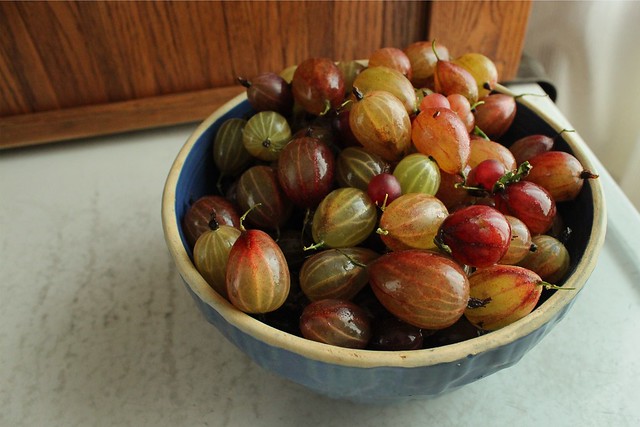
Sunday afternoon, I got a couple of pounds of gooseberries from Klee's.  I made the time to work them into jam right away Monday morning since they were pink and soft.  They were mixed varieties, that when commingled with sugar transformed into a singular flavor that I still can't describe.  They are tropical I swear, a Midwestern answer to passionfruit.  My little tester jar of gooseberry jam the other week told me I should stop shy of the 220 degree gel point, so I boiled to 118 degrees and was rewarded with a softer set.  I'm going to write down the recipe, since it bears remembering my process. 

gooseberries.

Gooseberries are naturally high in acid.  Green gooseberries higher of course than those that are picked and allowed to blush - but with the blush their tartness mellows just a bit and makes a "prettier" finished preserve.  There really aren't a whole lot of gooseberry jam recipes out there I noticed in my digging.  Even the county extension website was vague (and why don't those conventional sources use weights?? This plagues me:  I am a scaling addict.).  To be extra "safe", I added the juice of a half lemon.  There is definitely enough natural pectin that you should never dream of using a box of liquid or powder.

Gooseberry Jam 
yields about 4 half pints (I got 3 jars and one mostly full to eat now)
  • 2 lbs. gooseberries, tops and tails trimmed
  • 1/4 c. water
  • 1 1/2 c. granulated sugar
  • 1/2 lemon, juiced
Combine the gooseberries and water in a large preserving pot and smash casually with a masher to crush most of the gooseberries.  Heat over medium heat and cook until the gooseberries break down a little, about 10 minutes.  Then add the sugar and lemon juice, increase the heat to medium high and continue cooking, stirring regularly, until you reach your desired firmness - about 118 degrees as I mentioned above.  You'll feel the thickness of the jam increase as you stir, and the jam should sheet nicely off the spoon you are stirring with.

When the jam is ready, pour into sterilized jars, top with lids and rings, and process in a boiling water bath for 10 minutes.

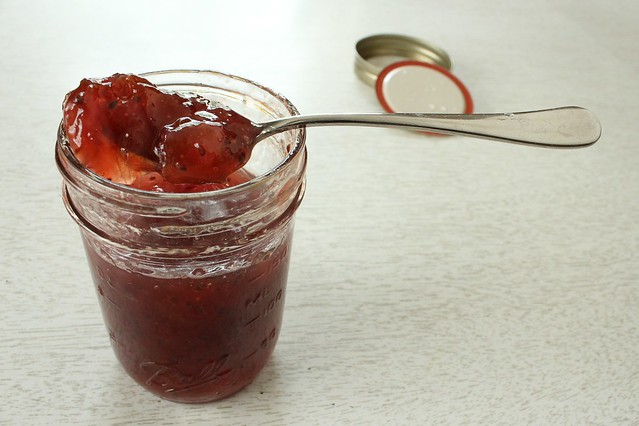
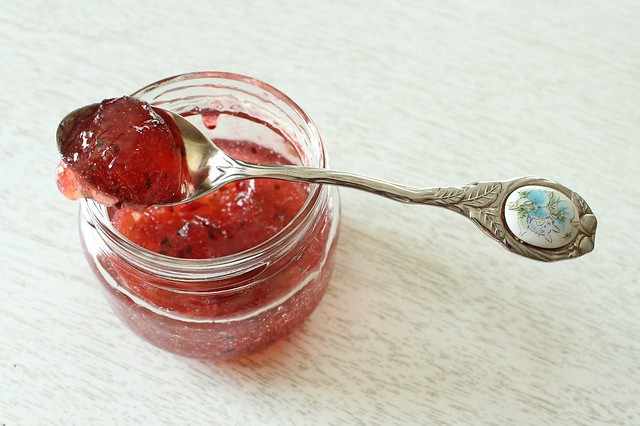
gooseberry jam.
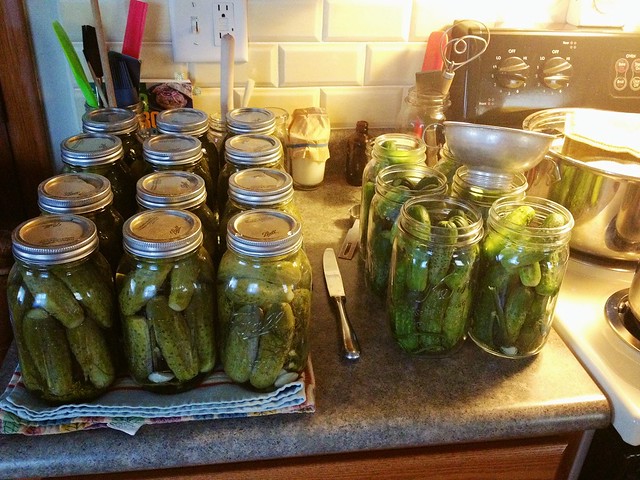
This week, I also did pickles.  My mother-in-law wanted a dozen jars and bought me a half bushel of cucumbers at the farmer's market on Tuesday.  By Tuesday evening, I had done 22 quarts (losing one to a broken jar).  I used my Gram's pickle recipe, misjudging the amount of brine I'd need two times, causing me to pause and make more.  That worked out all right, especially with a new baby walker anxious to try out his new skills at my feet in the kitchen.  Maybe I'll always associate his first steps with a mountain of pickles; that's kind of a nice thing.

pickles.
This recipe is the only pickle that tastes like a real dill pickle to me.  The recipe is in my book

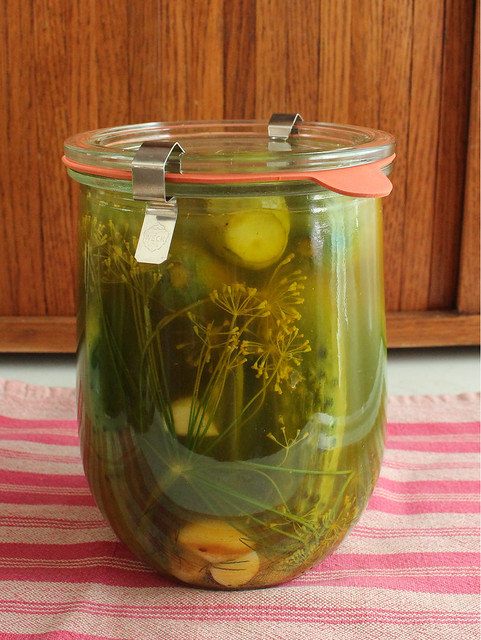
By late evening, I had the pickles mostly done.  I had about 5 pounds of cucumbers remaining and I was too tired to think about more pickles.  They sat for 2 days in the fridge before I put them to their final rest in jars.  I tried two kinds of refrigerator pickles that I'd not made before.  The first were these turmeric spiked whole dills that Ivy recommended.  I used the recipe as a template, since I was low on fresh dill.  I used Spice House pickling spice and extra dill seed.  I used Bragg's cider vinegar even though I "killed" it by heating it to a boil.  I love the taste of Bragg's so much that any other vinegar doesn't taste like vinegar to me.  A half recipe of the brine filled two quart sized jars just fine.

refrigerator pickle
This Weck jar is slightly bigger than a quart though, I think... 

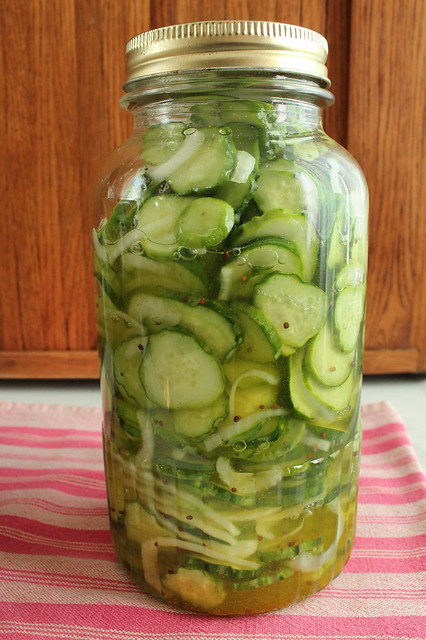
I sliced the remaining pickles to 1/8 inch on my mandoline and made a big jar of refrigerator pickles.  I got the recipe from my Parents, who had gotten it from someone in the '90's.  I remember the plastic pail of bread and butter pickles as being too sweet and kind of flabby, not really my favorite things 20 years ago.  But I modified the recipe and so far I think they are one of my favorite pickles ever!  In part, because I left out all traces of celery seed.  There aren't many things I dislike, but I've come to the realization that celery seed is kind of one of them. 

I can't seem to keep my fork out of this jar.  After 2 days, the cukes are still pretty crisp.  I kind of winged the recipe, making just 1/4 of the brine (which was simply equal parts sugar and white vinegar, with the addition of 1 tablespoon of kosher salt), and adding a  half onion and extra brown mustard seed.  This recipe is so quick, just mix everything and pack it into a jar.  I'll give the proportions for a whole batch - but keep in mind it's pretty forgiving.  The cukes give off their own liquid when allowed to rest in the salted vinegar brine, so after a few more hours the jar above was completely filled with liquid.

Bread & Butter Pickles
  • 3/4 of an ice cream pail of thinly sliced cucumbers (remember when everyone ate ice cream from a gallon pail??) (I'd slice about 1/8 inch thick) 
  • 4 c. granulated sugar
  • 4 c. white vinegar
  • 1/4 c. salt
  • 1 1/2 t. turmeric (I added extra)
  • 1 1/2 t. mustard seed (I added extra)
  • 1 1/2 t. celery seed (I omitted it)
Combine everything in a large bowl (the ice cream pail if you are following the '90's approach) and mix well.  Place in the fridge and let sit for 4-5 days before eating if you can.  The pickles will last at least 6 months under refrigeration.  (I prefer to store in glass of course, I just mixed everything in a bowl and packed into the more-than-quart glass jar seen below.  I love that jar, my Mom gave me some honey in it once and I can't bring myself to give it back to her...)

bread & butter pickle

Part of the reason I might have a new-found love for these bread & butters is that I've been making single cucumber batches of James Peterson's Thai Cucumber Salad with Peanuts from his Kitchen Simple cookbook.  I am a voracious reader of cookbooks, and I think one of my favorite authors is James Peterson.  His books seem like friends to me, and the Kitchen Simple book in particular has become my trusted ally in quick summery eating.  His salad has equal parts sugar and rice wine vinegar (the unseasoned kind), some chile peppers and plenty of cilantro.  It's so good.  I'd imagine I could do up a quart similar to the bread and butters and munch on them for a month or so and I might just have to get more cukes to do that.

So what do I, "unemployed" for some 8 years already, do on a Friday evening now?  Afternoon has come and gone since I started writing this, and a spanakopita of sorts is just about to come from the oven, concocted of fresh chard and kale and some frozen spinach unearthed from the freezer.  The new baby walker opted out of a nap to practice his craft and is already asleep at 6 pm.  The window are flung wide open with the coolness of our most excellent summer weather ever.  I don't feel the pangs of sadness I once did that I don't do anything exciting come Friday night, instead I take pleasure in the hard work of the week and get ready for a country visit so I can hopefully bring some more work home with me.  It's really the best kind of life.

Thursday, July 10, 2014

Recent Preserving.

I use the term "recent" loosely.  It was Monday when I finally got the jars I had my imagination set on completing, and it was Monday when I made the decision to ditch the second little batch of delicious honey-sweetened strawberry-thyme jam (from Food in Jars' latest book, Preserving by the Pint)  that had been waiting for me in my covered red leCreuset pot for 4 days.  (It smelled fermented, and sadly the berries did not have a pleasant flavor.)  Time with two little boys and summer and birthdays got the better of me; I remind myself that it's okay to let things go back to the Earth when time slips like that.  That's my Mom's quote, and I think of her each time I forget about some precious leftovers, or get too ambitious and forget to mind my real-life timing.

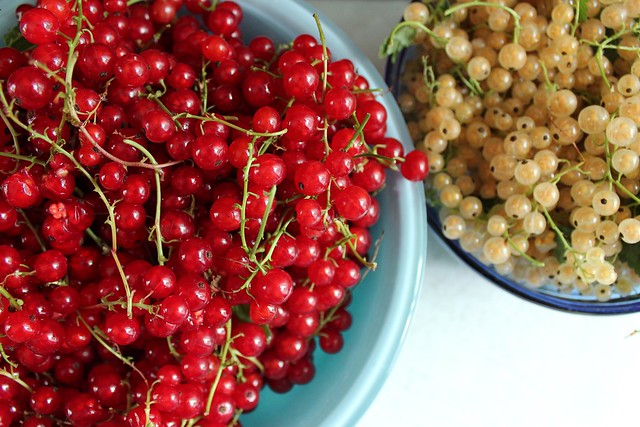
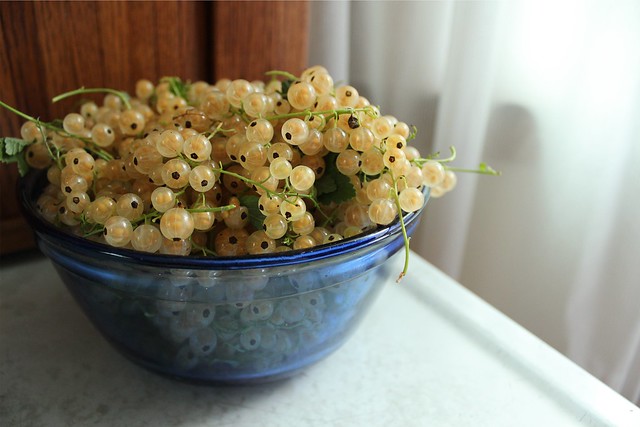
red & whitecurrants

Last Saturday, we went to Klee's Out on a Limb.  I discovered them last year, and make no qualms about calling them my personal orchard now.  It's maybe a 20 minute drive, but feels more rural than that.  This was the second time I've gotten currants, and not being within days of giving birth as I was last year, I was able to pick them myself (with Candy's help).  I tried every variety and since the blackcurrants weren't quite ready, I got red and white.  White currants.  I think I mentioned 50 times how beautiful those things are, making up for the flavor I felt wasn't quite as good as the red seeing as they weren't as tart.  After 5 lbs. in my bucket, I tried some pink currants too - and those had quite a lovely flavor.  I have to rein myself in from a currant only preserving season.  I think I love them that much.

white currants
Transluscent, they look like pearls or fish eggs.  My eager baby-eater liked them very much.   

Last year, I made cordials out of them.  Both were great, though I probably preferred the shrub that turned viscous and thick, a mouth-coating thickness from all the pectin.  I actually just finished off the bottle, only tippling tiny cupfuls here and there because it was so sweet.  Aged a year, it was still wonderful.  I agonize over investing in good rum to make more, and as I do, the extracted red currant juice ages in my fridge.  I should decide to can it or freeze it before typing any more, so it doesn't succumb to going back to the Earth too.

I also have a small amount of non-juiced currants left which I need to get into vinegar.  Red currant drinking vinegar was my favorite flavored vinegar last year, it barely lasted me a month!  I might try it with the white currants and see how I like it.  (Note to self: must also invest in another SodaStream seltzer cartridge.)

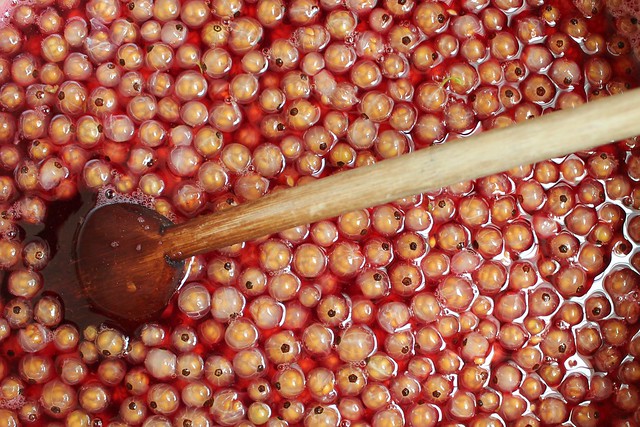
floating white currants

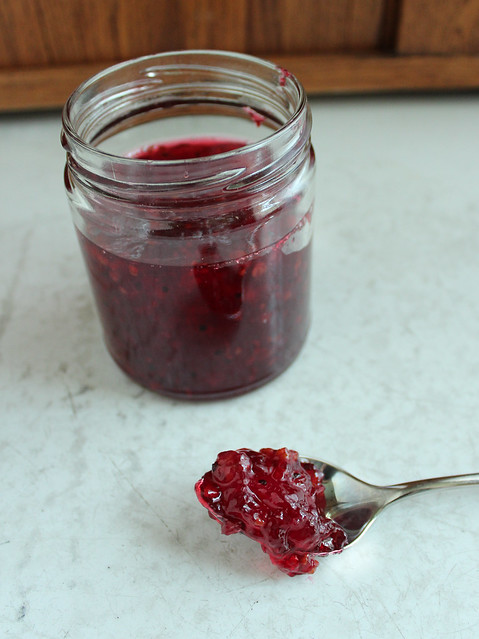
currant jam
Seedy currant jam.

Last year, I only made currant jelly - which is so easy I'm not sure there is an easier preserve to tackle.  Only slightly more work was currant jam, which uses mostly currant juice (I used red) and a pound of whole, stemmed currants.  For juice, you don't need to remove the stems so the process is truly efforless.  The 20 minutes spent gingerly plucking the white currants from their tiny green stems was worth it - and I thought the color contrast was beautiful even though I knew it would fade with the cooking.

The jam itself is nicely seedy, tasting tart like the currant jelly, but more interesting and maybe kind of nutty with the seeds.  I read that currant seeds are quite healthful too (especially in the blackcurrants, but I figure the other colors must be as well), so it seems like a worthy offset for a sugary preserve.

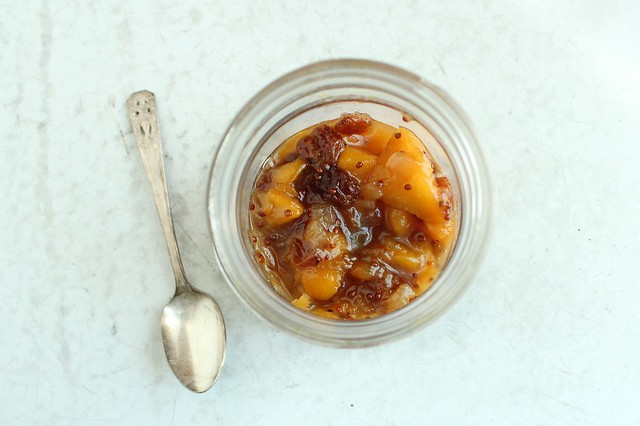
peach chutney

Nearly a week before the currants, I split a case of peaches with a neighbor.  It's the 3rd year I've had "peach truck" peaches, which come from Georgia and are dropped nearby at a number of locations locally.  (The service is Tree-Ripe.)  I feel like we hit the jackpot, since they harvested Berta peaches for the first trucks of the season.  They were some of the best peaches I've had in years, true "drip-down-your-wrist" fruits, with excellent flavor and color.  I made a half batch of Marisa's Honey Sweetened Peach Chutney, which I altered slightly to account for my extra spice addiction.  A friend gave me a jar of dried Piri Piri chiles last year, and I hadn't used too many of them.  I added 15 to the pot - which turned out to be pretty spicy.  I fished 4 of them out as I was tasting, but boy those have some good flavor.    I also added extra brown mustard seed, and probably more fresh ginger.

Another great thing about this recipe is Marisa's trick of removing peach skins.  Simply cut the peaches in quarters, remove the pit of course, and cover with boiling water for 3 minutes.  Drain, and the skins slip right off.  Amazing!  I used the same method to make some fresh peach salsa for our tacos last night, I don't think I'll ever blanch a peach traditionally ever again.

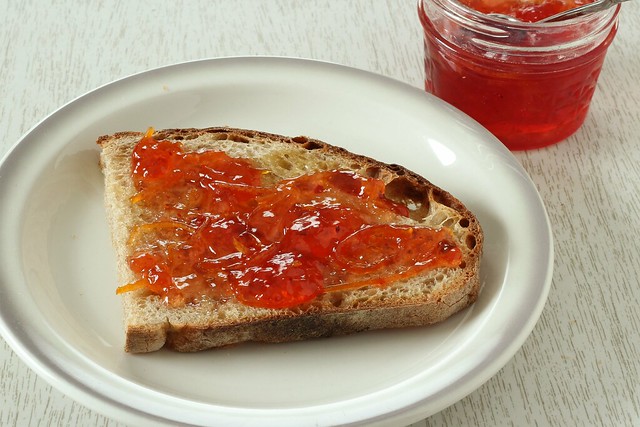
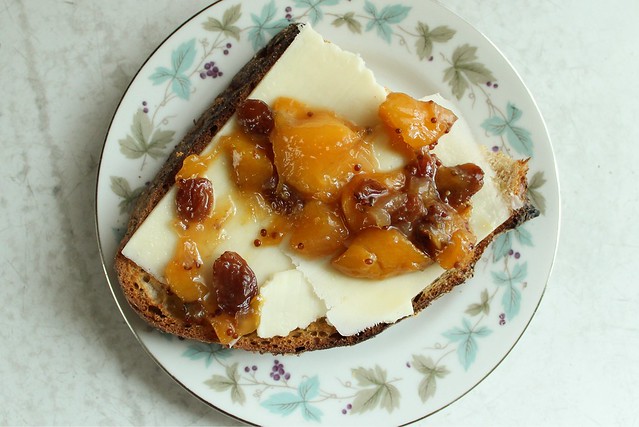
peach chutney, toast.
This stuff is so good that I might use the last of the peaches to make another batch - maybe less spicy for gift giving.  I'm definitely hoarding the 4 jars for myself.

In with my currants from Klee's, I had a handful (literally, 58 g.) of gooseberry.  I have never tried gooseberry.  I can't describe how excited I get to try new things, and at the orchard, I nibbled a bunch of different varities.  (I need to remember to bring a notepad and pen there, I can only remember choice things: like that the Newtown Pippen apple was Thomas Jefferson's favorite, and which tree was the mammoth Wolf River variety...)  The gooseberries will be on more by this weekend, so I made the tiniest batch of jam ever to see what I could expect.

handful of gooseberry
I used a 6 inch stainless saucepan for this jam.

On some reading, I let them sit around until they were pretty soft and had turned from their bright green to a more rosy color.  Then I topped and tailed them (that's a Linda Ziedrich term that seems to really stick in my brain), and weighed them in at a mere 56 g.  I added a tablespoon or so of water and steamed them a minute or two to get them softened before adding the same amount of sugar and cooking them down.  It was such a small batch that the whole process took less than 10 minutes.  The color and flavor were incredible.  I'll have to make time to get down there for more!

gooseberry jam

I really just couldn't get over the color, which I figured was about as close to watermelon-colored as I could describe.  The tiny seeds even look like melon seeds too - which I thought was interesting.  The flavor of gooseberry jam was different than I expected, though I'm not sure at all what I was expecting.  It has a tropical nuance to it, nicely tart but not as tart as the currant it seemed.  It feels pectin rich, and has a very firm set - I could have probably simmered it a little less.  My tiny batch filled half of a 4 oz. pimento jar, more than I expected, but definitely not enough to satisfy my new gooseberry obsession.

It's a good start to the season, which I have to remind myself is actually here.  It's a pleasantly cool summer,  with only a handful of 80 degree days so far.  It's filled with walks and bike rides (my older son just discovered how fun his first bike can be, and has developed an obsession of his own), fly-by-the-seat-of-my-pants meal planning, and yet another year of a struggling garden.  I remind myself that it's not important right now to be cataloging what I do.  But, still I love the photographing, and if I seem quiet here, there are still notable things going up on my Facebook page and Flickr.  If you have some gooseberry ideas for me, shoot them my way.  We'll see what comes of them!

Saturday, June 7, 2014

Rhubarby.

Last Sunday evening we pulled back into town, four of us stuffed into the car that seemed to shrink fast with two boys in the backseat and so many plants and eggs and luggage and leftovers nestled in around us that it was hard to move.  The baby and I went out to the farm for a 4-day weekend, and my husband and a school-worn 2nd grader had come to pick us up.  Sunday morning, my Dad picked me some rhubarb.  That always seems to be tricky thing.  How much do you want?  Not too much?  Once you get to slicing through the stalks, you lose track of how much rhubarb is not too much.  I figure I had a paper sack with about 30 pounds, so much that he had to tie it up well with garden twine to contain it to the bag.  

Ash-rhubarb comparison.
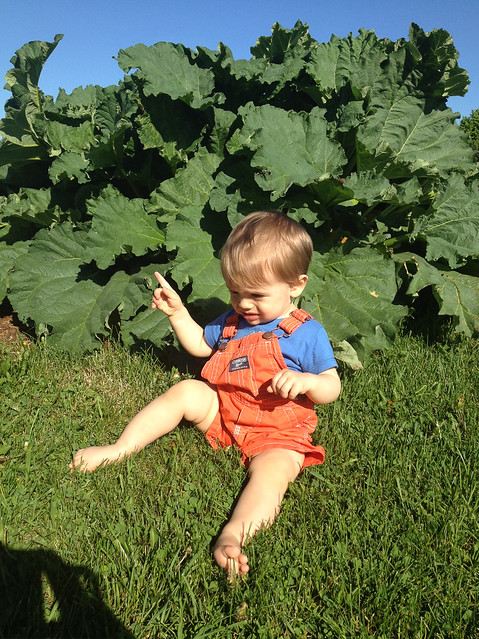
With baby for scale.  This rhubarb patch is huge.

I remember the days when I practically lived behind the windshield.  Almost every weekend it would take me exactly 4 minutes to pack everything I'd need; I'd toss all of it into a green army duffel sack that I actually still have but is going unused in the basement.  Now, it takes me way too much time and planning to get out the door.  I have to tuck all the cultures in, I have to bake bread to bring along.  I have coolers in the summer to keep all the stuff I bring to and fro cool.  An extra son makes backseat real estate a premium, and I absolutely refuse to drive a minivan so these sardine days will be with us for the foreseeable future...

But the rhubarb was worth it.  I didn't bring any dessert with me this time because I knew my Mom would have something rhubarby baked, and she did.  It was great.  In fact on Saturday, I ate rhubarb dessert 3 separate times.  But when I lobbed the heavy bag into the basement fridge on Sunday night I wondered if I'd get through it without having to sacrifice any to the compost pile.  It took the week, but I did it.   I'm proud to admit I had zero waste, even though that rhubarb patch grows like crazy and when I can't reach it I'm blessed with neighbors who are happy to share.

rhubarby.

I got to meet Marisa McClellan (Food in Jars) in person when she was in the Chicago area in April, and was freshly inspired by her and her books.  I made a tiny batch of her Rhubarb-Rosemary jelly (a single canned jar, actually and a mostly full one to enjoy now) from her new Preserving by the Pint book after the rhubarb had been prepped and sitting in the pan with water for 24 hours.  It seems each day I feel I get nothing accomplished, and when I fall into bed exhausted at the end of the day, I realize that I actually accomplish tons.  Sometimes preserving might go on hold for a few hours but thankfully it's a forgiving process.

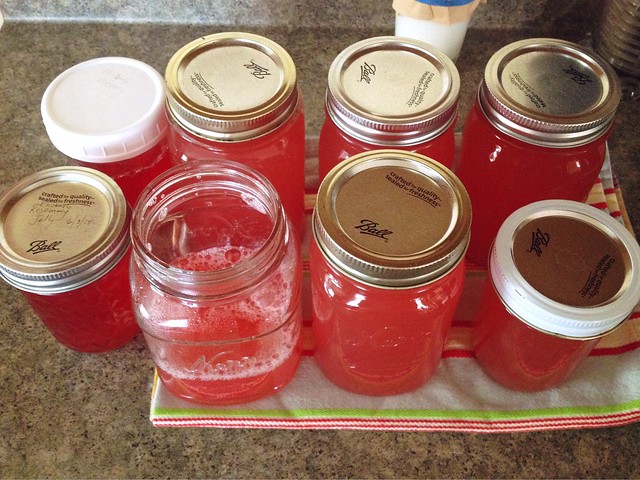
Encouraged by my Mom's bright pink rhubarb dessert, which when asked she told me she just baked with the pinkest parts, I set out making rhubarb juice concentrate using just the pinkest parts of the stalks.  Why didn't I ever think of that?  For years, my rhubarb endeavors were "industrial green" as I had taken to calling them.  Delicious, but utilitarian.  The concentrate was from the Ball Home Preserving book, and had lemon and orange zests and juice in it.  It's really very nice, and 4 1/2 pints are probably a perfect quantity for me as the sole rhubarb consumer.

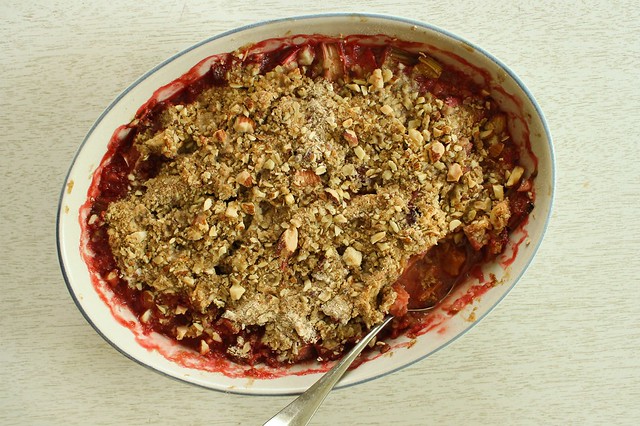
Then with a glass of rhubarb juice in hand, I made myself a crisp.

rhubarb crisp

In the interest of time, I noted the process on flickr if you click the photo.  I still have some left - it's marvelously tart.

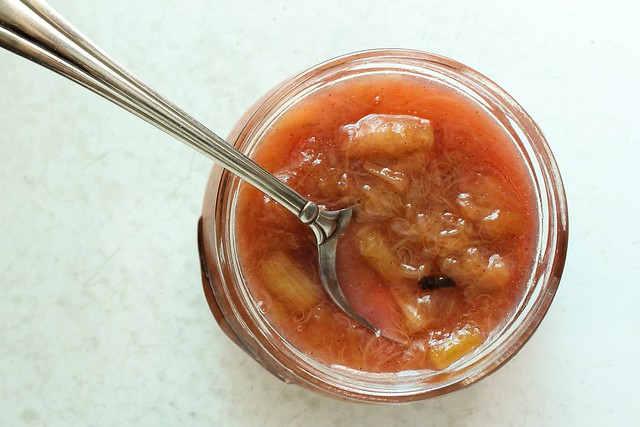
Thursday I made 2 9x13 pans of Rhubarb Kuchen and yesterday I delivered them to my friend Ginny who shared them.  And somehow in between line-dried batches of laundry I also managed to get a batch of Marisa's Rhubarb Vanilla Jam with Earl Grey done yesterday too (the recipe is in her first book, and also on her site) - and in the company of a napless and fairly cranky kid who grasped at my knees for dear life pretty much the whole time I was stirring the canning pot. 

I really can't get over the difference using just the pinkest part of the rhubarb stalks!  I think this is one of the nicest rhubarb jams I've had ever.  I left some of the errant earl grey tea leaves in for asthetics.

rhubarb vanilla jam with Earl Grey

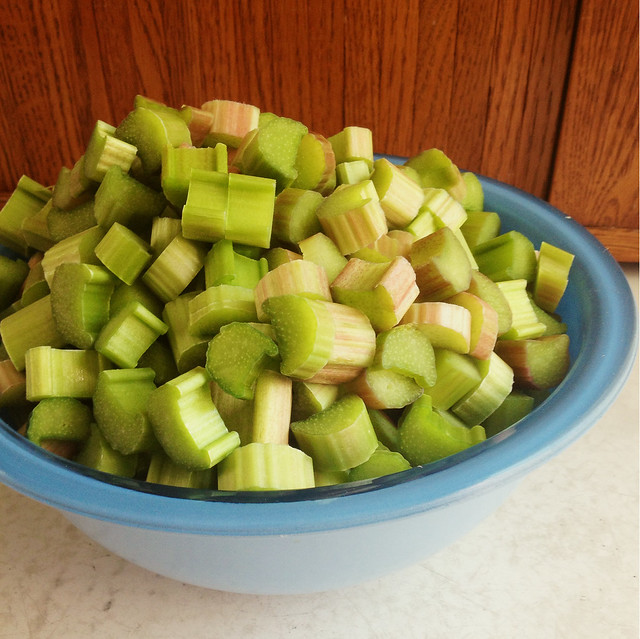
All of that pink rhubarb left me with an amount of green rhubarb, which I think tastes just as fine as the rosy base of the stalk if not conjuring a more vegetal side of rhubarb.  Yes, I could do something savory with it... but I wouldn't bother trying to get the boys to eat it.  Instead, I chopped it up and was amazed to find I had exactly the 2 1/2 pounds that Deborah Madison calls for to make a green rhubarb puree in her Seasonal Fruit Desserts book that I was fortunate to find a copy of.  I have to pick up a grapefruit later today to make it, but look forward to her tarts made with a corn flour base and barely spiced green rhubarb puree.

green rhubarb

Hopefully, that can wait a few days until the rhubarb crisp is gone.  It does seem to me that sliced rhubarb keeps well in the refrigerator if stored in plastic.  That's probably a good thing.

Friday, February 7, 2014

Mixed Citrus Marmalade.

I think I may have found the secret for bringing the sun back to our winter, and it's making marmalade.  I'm not talking about the sunny feel of the citrus or the sunny completion the finished preserves take on, I'm talking about the actual sun.  It's as if making a batch of this stuff actually worked as some variation on a rain dance, coaxing the sun from wherever it has mysteriously disappeared to the past several weeks.  I made this yesterday morning, and I've seen more sun streaming through my windows in the past 24 hours than in the past month.

marm jars

I've been patiently waiting to see organic blood oranges for about a month, and I just found them in my co-op last week.  I like to make at least one bright, citrussy thing in the winter, because it seems like there is all this time to fill - and there is no disputing that winter citrus is king of the fruit world.  Every November, like clockwork, I begin trying to squelch the absolute need I get for a good grapefruit, and by January they are hitting their stride.  Oranges seem to be reliably good from December on and I eat at least one a day, usually in my morning smoothie with plenty of ginger and sometimes some blueberry.  Cara Cara oranges pop up around January with their cross-flavor of sweet and tart; they're meaty and deep colored, but not as red as the blood orange.  Blood oranges appear last in my northern neck of the woods, and as Linda Ziedrich aptly said, they have kind of a berrylike essence.  I like that they aren't so sweet.  

blood oranges. 

And I like that I had my eye on a mixed citrus marmalade recipe in Diana Henry's new book Salt Sugar Smoke which focused on all my favorite types of citrus.  Her recipe called for Seville oranges, which I can't say I've ever seen here in Wisconsin.  I used navel oranges instead - and changed up her recipe a little in other ways too.  She used a method for making marmalade that I'd not used before: letting the peel soak in the citrus juices and water overnight before cooking down.  I like starting things the day before, so this was a favorable way to do things.  I'm not sure if it had much flavor contribution, but this turned out so well I'll likely do it the same way in the future.

She calls it "Nick's Good Morning Breakfast Marmalade", so named for Nick Selby who is a master jam maker and the English grocery and kitchen Melrose and Morgan, who gave her the recipe.  One taste makes me want to hop right over the pond to visit them in person, I'll tell you that.  My version strays slightly from the British originals, but it is still lovely.  Silky, barely set, and perfectly sunny in the deepest part of this never-ending winter.


citrus zest

Begin the day before, since the peel needs to soak for 8-12 hours.  I always weigh sugar in metric weights, so I can mix types and not worry about keeping track.  This one calls for 10 cups of sugar, which is ridiculous for my continuing quest at sugar consumption reduction, but it's absolutely worth it.  Use a raw sugar to feel a tinge less guilt.  Sharpen your chef knife to get the thinnest shreds of peel possible, and remember that organic citrus is best since you are eating the peels. 

Mixed Citrus Marmalade (adapted from Diana Henry & Nick Selby)
yields about 10 half pints
  • 1 pink grapefruit
  • 4 blood oranges
  • 3 navel oranges
  • 4-5 lemons total, divided (to equal 2/3 c. lemon juice and some zest)
  • 10 c. granulated or raw sugar (1916 g.)
Wash all citrus well.  Using a peeler, carefully peel grapefruit, oranges and 1 or 2 lemons (your choice), leaving as much of the white pith behind as possible.  Stack the peels and slice into thin shreds.  Put them into a large preserving pot (5 quart).

Next, juice all the citrus except the lemons into a large measuring cup.  Save the pulp and any seeds and tie them up into a square of cheesecloth.  After you have all the citrus juiced, add enough water to equal 10 cups and pour over the peel in the preserving pot.  Add the cheesecloth bag of pulp and seeds to the pot, stir well, and put a lid on it.  Let it stand 8-16 hours before continuing.

When ready to continue, prepare a hot water bath canner (and jars) and juice lemons to equal 2/3 c. lemon juice.  Measure out the sugar and have it standing by in a bowl.  Bring the preserving pot to a boil over medium high heat, then reduce heat and simmer, letting the peel cook until it is tender and the liquid has reduced by half (to 5 cups).  The peel will likely be soft sooner than the liquid reduces, so keep an eye on it and remove the peel with a slotted spoon or spider when it's done.  The whole process should take about 90 minutes.

After the liquid is reduced and the peel is soft, remove the cheesecloth bag and discard.  Stir in the lemon juice and sugar and stir to completely dissolve.  Bring back up to a simmer over medium high heat and skim any foam that forms.  After skimming is complete, add back the peels.  Stir frequently, and simmer until the marmalade gets to the set or gel stage (220 degrees, I let it go to about 223 degrees, it's not a heavily set preserve however.) Once it hits the gel stage, remove from the heat and let stand for about 10 minutes as you ready your sterilized jars.

Fill jars leaving 1/4 inch headspace and process in hot water bath canner for 10 minutes.  Remove to a towel lined counter and cool completely.

zests.

I left one jar uncanned to enjoy now, but the yield was right on.  I always have trouble distributing the peels evenly among the jars, but I suppose that's OK.  The peel of the grapefruit in particular adds a lingering bitterness that some might not love as much as I do.  When I consider giving away a few jars, I'll keep that in mind and hold back the ones for myself with the most peels!  Diana Henry said she reserves this marmalade specifically for morning toast, but I think the color and texture would be perfect to top a plain cheesecake or small tart.  I also think the thick syrup would be good mixed with seltzer water.  But I'll probably take her lead and hoard the jars for morning toast or other morning confections.  It's making me want to make a fresh batch of croissants or maybe some sourdough biscuits...

marm spoon

Wednesday, November 6, 2013

Reflections of Preserving Season

I keep saying I'm done, that I will not can any more this year.  I went so far as to send home all extra paper grocery sacks of clean pints and quart jars with my Mom when she last visited, an attempt at organizing my basement.  But maybe now I know I'm a true preservationist when the work is never fully done, maybe the nature of doing for yourself is a drug of sorts that I just can't kick.

seckel pears

Last week, a neighbor gave me some gorgeous seckel pears from a tree discovered in her parents yard.  I said I'd take some just for eating, but they were so good and they had so many that I ended up getting a few pounds to preserve.  Seckels seem to ripen faster than less petite pear varieties, and I set them up on a sheet pan for a few days to monitor their process.  I decided to try pickling some using Marisa's method over on Serious Eats, a pretty quick endeavor since the pears keep their stems and skins.  I used some raw sugar because I was out of granulated, but then made a series of errands to pick some up along with another flat of pint jars and some fresh pink peppercorns, star anise, and vanilla beans from the Spice House to do up a batch of Mrs. Wheelbarrow's spiced syrup version in the New York Times.

canned seckels
Marisa's pickled pears on the left, Mrs. Wheelbarrow's syrupy ones on the right.

The pears in syrup took awhile, especially with interruptions from the baby who would not succumb to sleeping.  More lessons in patience from the peeling of diminutive pears, trying to daintily finagle a 1/4 teaspoon to hollow out their seeded bellies - but worth it when I tasted the spiced syrup - which actually tastes exactly like a visit to the Spice House.  I didn't even mind that my 24 seckel pears only filled 3 pint jars and I had 3 pints of syrup that I canned up assuming that my pal Alanna would have a good idea for me on how to properly enjoy drinking it.

Prior to pear preservation, I made myself contend with the last 4 quinces that I was still debating what to do with.  This was the first year I've tasted quince, and I am completely hooked.  For some reason, I could hardly bring myself to do anything with the few of them I had, I so much enjoyed looking at them and smelling them, and really just living with them on my hutch counter for a few weeks...

quinces.
(On the left there is a pawpaw!  The first one I've ever tasted... more here.)

Instead of deciding on any proper preserving of them, I ended up doing two batches of them the same way:  roasting them in a 320 degree oven for a couple of hours until the skin blistered, cooling them to the touch, then peeling, coring them, and carefully slicing them into fat pieces.  I made two piles on my counter, one of the sliced pieces that maintained their shape, and another of those that were too mushy to look attractive.  Then I made a syrup of equal parts sugar and water (600 g. of each, which was plenty).  The nice slices simmered away in the syrup for 30 or 40 minutes until they turned a more uniform color (the roasting left them unevenly colored) and were infused with sugar syrup.  The mushy pieces I put into a smaller sauce pan and simmered with ladles of the ample sugar syrup.  I mashed casually every so often with a potato masher, and added syrup as it was needed, all the while sneaking spoonfuls of hot quince for myself which felt as autumnal and comforting as adding another down blanked to the bed.  (I found the idea here.)

quince preserves.
quince preserves.

While I didn't bother canning this proper, I'd imagine 10 minutes in a hot water bath would do the trick.  So far, I'm having some really good morning snacks of toast, a pretty amazing grilled cheese with havarti and quince slices, and last week I made David Leibovitz's whole wheat croissants - which I'm pretty sure these quince preserves were born to marry.  I was also left with a bottle of quince syrup when I strained out my slices.  I'm not sure what to enjoy it with first... maybe rice pudding or some vanilla bean ice cream?  The quince was so delicious that I couldn't bring myself to add any aromatics at all to the simmering pots; these are all made just simply of quince, sugar, and water.  Similarly, I think I could almost just enjoy this by the shot glassful.

quince syrup

Monitoring the simmering quince left me plenty of time to think about all of the free fruits and berries I found close to home this year, not to mention the beginning of a relationship with a wonderful, old-fashioned orchard (Klee's Out on a Limb).  There were sour cherries from a friend of a friend, and more from neighbors who dropped them off when the baby was just weeks old.  Pints of mulberries from trees walking distance from my house, and the happy discovery late in the season of a white mulberry tree that I'll keep my eye on for next year.  Tart crabapples found on a walk just a week or so ago that made their way into applesauce and the more than one neighbor who offered me pears.  When farm markets were more difficult for me to visit at the peak of the season this year, there were also neighbors with ample vegetables to share.  (An amazing end-of-season green tomato sauce courtesy of plentiful green tomatoes from across the street.  Click here and read the comments to find a simple but delicious recipe.)  All in all, so many delicious things gracing my shelves to be thankful for as we head into the most thankful part of the year!

Friday, September 13, 2013

How not to can ground cherries.

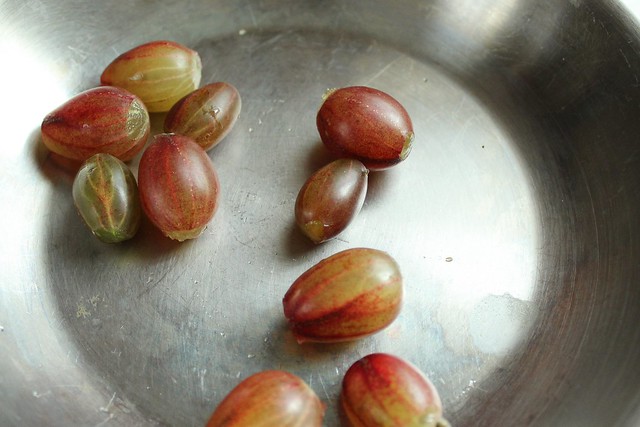
ground cherries.

Sometimes, my mouth speaks before my head registers what is being said.  I'm also guilty of not being thankful on occasion, particularly when I'm hungry or tired.  A combination of these things were at play when my Mom informed me about a week ago that she was bringing me a peck of ground cherries.  "WHAT?" I had said, maybe too loud.  "I thought you liked them!" she said back.  And I do.  But a bit of sleep deprivation had maybe left me lackluster in wanting to experiment.  "What am I going to do with a peck of ground cherries?"

The first thing I needed to do was husk them.  My Husband was going to help, but I took advantage of too hot, mid-90's temps to hole up in my air-conditioned kitchen a few days ago when he was at work and husked them all myself.  I wasn't working super fast, and fortunately the babe was fast asleep for most of the time; I'm not lying that it took a few hours.  Just how many pounds is a peck of ground cherries, you ask?  Almost 5 1/2.

Now if there were some information out there about canning ground cherries, that would be helpful.  I called our extension office, and was then referred to a Madison food safety specialist who couldn't tell me how to can them whole, which is what my Mom suggested that I do with them.  I thought that Google would be a help, but after quite a bit of searching, I didn't find much.  I did find that the ground cherry is a pretty healthful thing to consume, its naturally high levels of pectin are good at keeping cholesterol in check, and it is an excellent source of vitamin A.  My logic told me that if they were preserved in an extra light sugar syrup, they should be shelf stable... but please don't take my word on it, as I was not able to confirm it anywhere.  (For the record, I processed the pint jars in a hot water bath for 15 minutes.)

how not to can ground cherries.

I decided to raw pack the ground cherries, not remembering to take into account the likelihood of fruit float.  The combination of raw packing and using an extra light syrup increased the chances, and my 6 pints (which held all but about 1 1/2 lbs. of the ground cherries) all appear half full.  In the future, I will try to pack them hot, letting the fruit simmer for 5 minutes or so to release some of the liquid.  I might also do a heavy syrup despite all my attempts at lowering my sugar consumption.  I'm not considering this a total fail however, because the syrup turned a bright golden yellow, and I'm looking forward to the surprise of a delicious syrup when I open my first jar.

Untitled

Before experimenting with canning whole ground cherries, I did do up a little batch of the Chai Flavored Ground Cherry Preserves I made last year.  I forgot how great it was - and I think this batch was even better because I used a premium loose chai tea.  On buttered sourdough toast, I can't think of a better way to welcome fall.

chai flavored ground cherry preserves.

So my week-long project of processing ground cherry is complete, and in retrospect, I feel kind of bad for wondering aloud why my Mom would grace me with so much of this beguiling little fruit.  As I sat peeling back their little parchments I had plenty of time to think - and plenty of time to appreciate my parents and how thoughtful they both are, even when I am tired and sometimes say the wrong thing.  The golden jars of ground cherries neatly tucked on the shelves will remind me to be thankful for so many things, the change in seasons, the quiet wholesomeness of working with my hands, the prosperity of Wisconsin's land in late summer.   Little fruits that grow in their own wrappers, appearing to take flight.

on wings.

Wednesday, August 28, 2013

Of Yellow Transparents and Dolgo Crabapples...

The other day my friend Deena told me (that one of her friends told her) that with kids you could do all of the same things as you could do without kids — it just now takes twice as long, and is half as fun.  I'm not sure about the half as fun part, but boy does the twice as long ring true.  

Last Saturday, I bartered a pan of cinnamon rolls for some overripe (but still sauce worthy) Yellow Transparent apples from Klee's Out on a Limb Acres.  Standing out in the orchard, the baby resting in the shadow of an apple tree, chatting with Omer about things was just about the best way to spend a Saturday morning, and as I had suspected even before leaving home, I was inspired by the ripening orchard and came home with more than I figured on.  All in all I've been pretty good this year about not over-preserving especially the sweet spectrum of things.  But when my new orchardist friend was telling me about Dolgo crabapples, how beautiful the jelly is that they make, how he used to help his grandmother pick them for preserving and ate so many in their un-sugared tart state:  I just had to get some to play around with.  One smell of them sealed the deal.


dolgo crabapple

Then I ate one fresh from the tree.  Though super tart, once my mouth was accustomed to it I could really taste how they could be transformed into something amazing, if not just eaten plain as Omer did as a child.  They were beautiful looking as well, like near red balloons when freshly picked.  As they sat around my house for a few days, they seemed to deepen in color.  They infused the lot of my preserving this week with their cheerful bright pink.  

After getting home Saturday afternoon, I steamed down 4 pounds of them right away and let the juice strain for jelly.  I'm quite sure I've never worked with a fruit with such a good amount of natural pectin, the juice was silky and thick, bracing to taste on its own, but really not unpleasantly sour.  I got to making the jelly yesterday and got almost 4 half pints... I may have over cooked it just a little, but I'm not worried about it since the flavor is so good.


crabapple jelly
crabapple jelly.

I still had quite a few crabapples left over, and I remembered my Dad saying how much he liked whole spiced crabapples that his grandmother used to can.  Never having tried one, I tried not to remember the awful, fake red spiced apple slices that I'm sure I've eaten on more than one occasion at a Friday night fish fry with endless salad bar.  I looked in my Ball book to see about that, and settled on a recipe that looked pretty straightforward and old-fashioned.  I added ginger and used powdered allspice after there were no allspice berries to be seen at my co-op this morning.  The result was amazing, just like I knew it would be... and not at all like those garish nibbles on the side of a Friday night salad plate.

spiced whole crabapples

Whole Spiced Dolgo Crabapples (adapted from Ball's Complete Book of Home Preserving)
yields 5-6 pints
  • 8 cups stemmed Dolgo crabapples, pricked with a fork (about 4 lbs.)
  • 1 cinnamon stick
  • 1 T. whole cloves (place them in a tea ball, or tie in cheesecloth)
  • 1 t. powdered allspice
  • 2 fat coins of ginger, each about 1/4 inch thick
  • 4 1/2 c. granulated sugar
  • 3 c. water
  • 2 1/2 c. white vinegar
In a large preserving pot, combine spices, ginger, sugar, water and vinegar.  Heat over medium high heat, stirring occasionally to dissolve sugar.  Reduce heat, cover, and simmer the syrup for 10 minutes.  Add crabapples and return the syrup to a boil, stirring very gently once in a while.  Reduce the heat and just simmer the crabapples until nearly tender, about 10-20 minutes.  (They might try to burst along the seam where you pricked them with a fork if the heat is too hot.  I aimed for "al dente" apples...)

Meanwhile, ready a hot water bath and heat freshly washed pint jars.  (I like to hold them in a 250 degree oven, and pull them out just prior to filling.)

When crabapples are tender, use a slotted spoon to pack them into hot jars, leaving a 1/2 inch headspace.  Ladle hot syrup into the jars to cover the apples, leaving 1/2 inch of headspace.  Release any air bubbles and adjust syrup level accordingly. 

Apply lids and rings, and process in a hot water bath for 20 minutes.  Remove the canner from the heat and let the jars stand in the hot water for 5 minutes before removing to a towel lined counter to cool completely.


spiced whole crabapples

Before I had even tackled the crabapples, I made my year's supply of applesauce.  Before a couple of weeks ago, I had never heard of a Yellow Transparent apple:  so named for the pale yellow skin that looks nearly invisible.  I found a website, Orange Pippin, that lists apple varieties, tasting notes, and other attributes, and found that the Yellow Transparents are a good bet for sauce.  When I finally saw the apples in person, Omer explained that they are notoriously short lived, and when overripe, they can pop almost like a kernel of corn.  First, he had me taste an overripe apple, which was mealy and lightweight for its size.  Despite the negative marks against it, it did have good flavor, and when I then tried a perfectly ripe apple, I could see why people seek out this gem of a fruit.  

yellow transparent apples
Overripe on the left, perfect specimen on the right.

Fortunately, even the overripes were excellent for sauce. I added several crabapples to the pot as I started cooking them down to infuse the sauce with a little pink color; the extra pectin in the crabapples was just a bonus, and the finished sauce was sweet-tart and silky.  I added no sugar.


Untitled

All told, I got 17 pints of applesauce, which I was very thankful for after not making any at all last year.  Not bad for a pan of cinnamon rolls!  I had my older son help me turn the crank on my Gram's old Victorio strainer, and after all of the sauce was finished and resting we helped ourselves to big bowls full of still warm fresh pink sauce.

So it's true it took me 4 days to work through what normally would have taken me about 32 hours or less, but it was still pretty fun.  Estimating the newest boy's sleeping pattern sometimes worked and sometimes didn't, and having an extra pair of hands to hopefully learn a bit about preserving and to help in the kitchen was nice too.  I sure hope both of my boys will grow up and be as excited as I am to see things growing and have the pleasure of preserving it!